CO2 Cascade Rack System
Natural, Efficient, and Future-Proof Refrigeration
Product Details
A Natural Refrigerant Solution
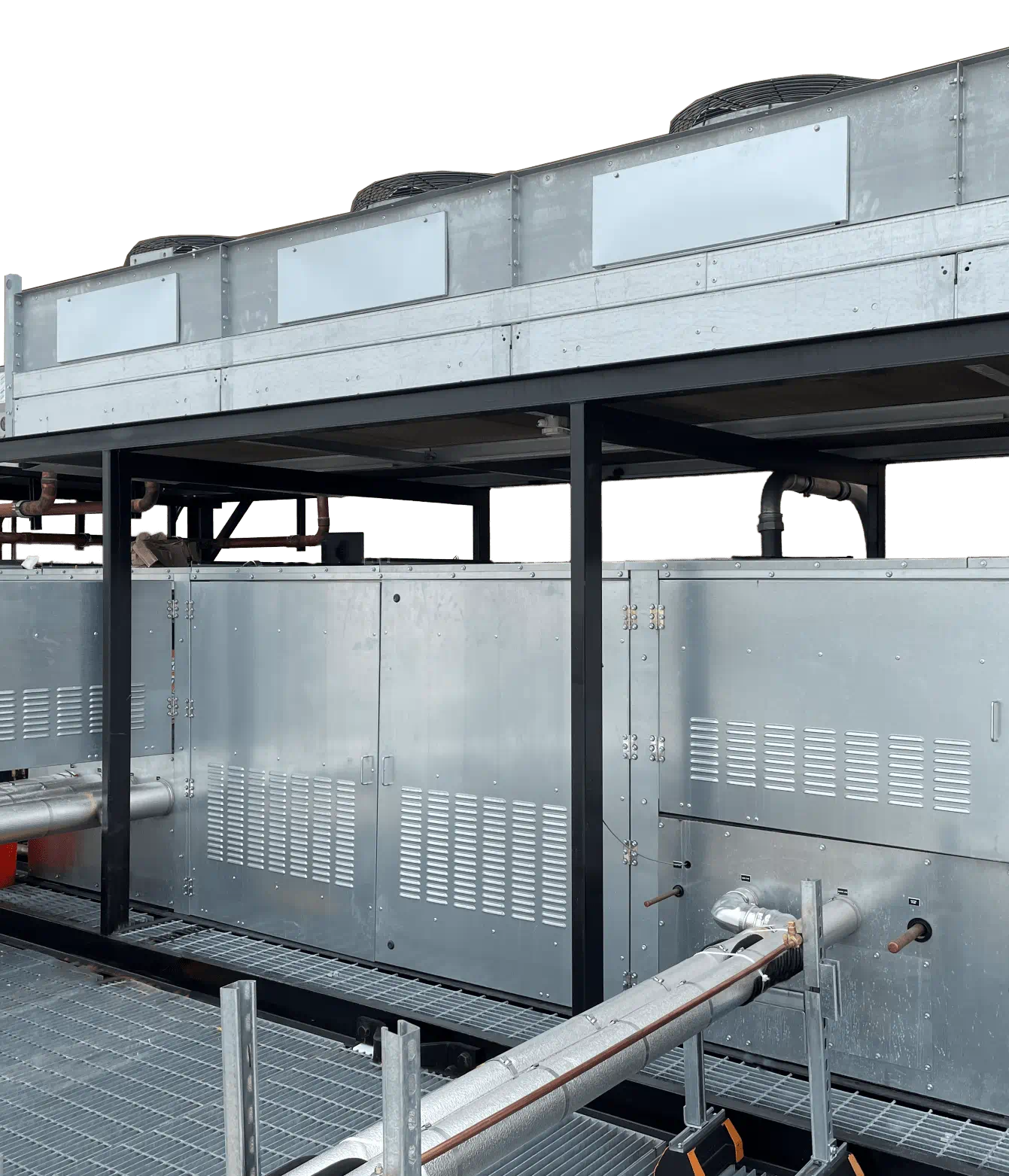
Hussmann’s cascade rack is a low temperature subcritical direct expansion refrigeration solution using CO2, a naturally occurring refrigerant. The use of CO2 as a refrigerant reduces the HFC charge with a minimal impact on energy efficiency to reduce the carbon footprint of the system.
Unlike CO2 secondary or liquid recirculation systems, cascade CO2 systems use a vapor compression cycle similar to traditional direct expansion systems. Instead of condensing against ambient air or water, the CO2 condenses against a primary refrigerant.
Key Features
- Uses CO2 as a natural refrigerant with a GWP of 1
- Rejects heat to a secondary refrigerant for optimized system operation
- Available with lower-GWP refrigerants, including R-449A and R-513A
- All low-temperature circuits operate on CO2
- Removes HFC refrigerants from the sales area for low-temperature applications
- Reduces total HFC refrigerant charge by 60-70%
- Primary HFC receivers are sized for winter flooding charge
- Requires less HFC piping throughout the system
- Uses smaller diameter piping due to CO2's high volumetric efficiency
- CO2 delivers approximately 7x the volumetric efficiency of R404A
Benefits
- Supports sustainability initiatives with a refrigerant GWP of 1 compared to R404A's GWP of 3,920
- Helps retailers adapt to evolving refrigerant regulations and environmental requirements
- Reduces carbon footprint by 30-50% compared to traditional rack systems
- Lowers total refrigerant costs by approximately 80%
- Minimizes refrigerant leak potential through reduced HFC piping
- Improves performance in high ambient temperature environments
- Reduces dependence on high-GWP refrigerants while maintaining system reliability
- Enhances operational efficiency through smaller refrigerant line sizes
- Increases environmental responsibility by significantly reducing HFC usage
- Provides a future-ready refrigeration solution using natural refrigerant technology

Downloadable Resources